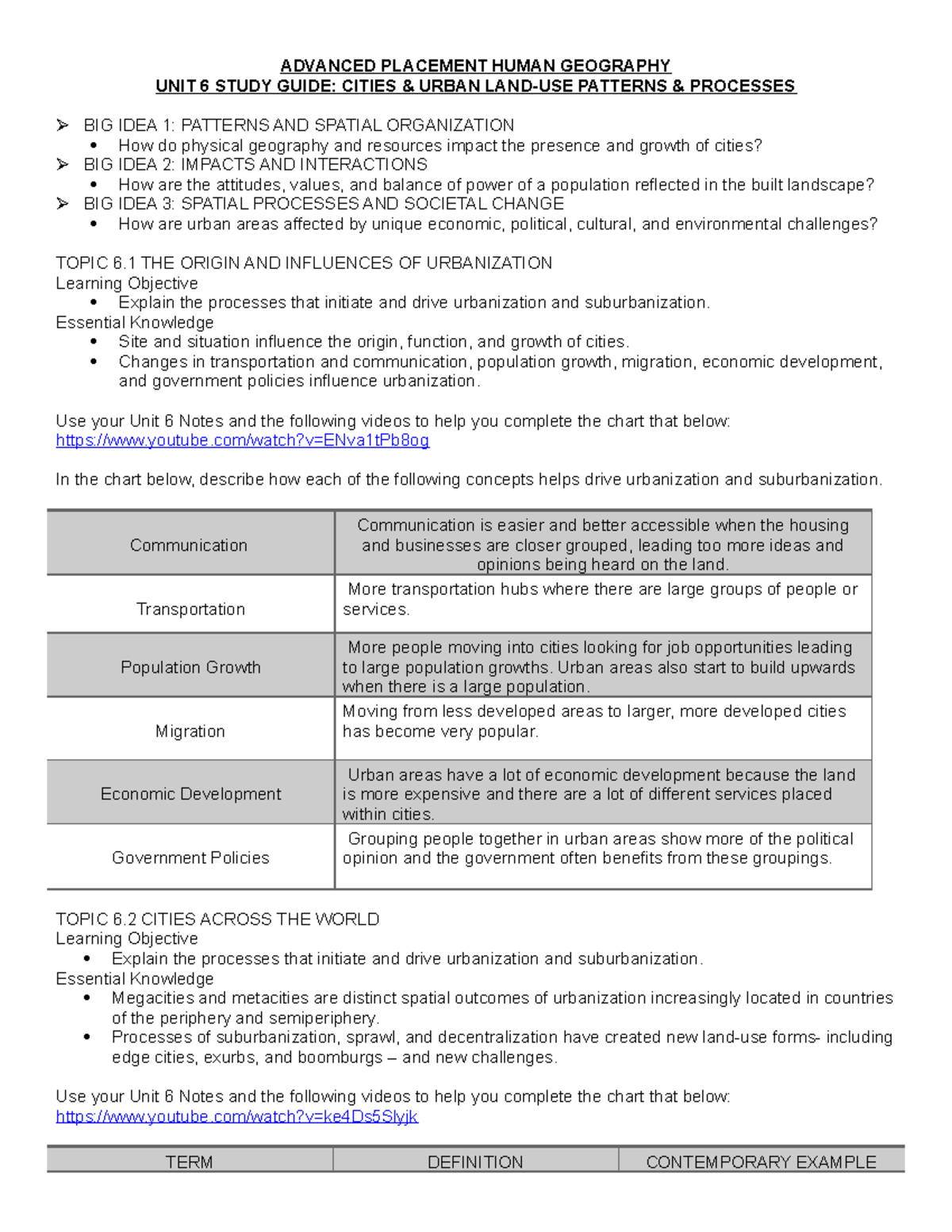

Suburbanization is a important phenomenon in human geography, specially in the context of urban development and population distribution. It refers to the process by which people travel from urban centers to the surrounding suburbs, leading to the growth and expansion of suburban areas. This trend has profound implications for urban planning, infrastructure, and the overall quality of life for residents. Understanding suburbanization in the context of AP Human Geography involves exploring its causes, effects, and the broader implications for society.
Understanding Suburbanization
Suburbanization is driven by a variety of factors, include economical opportunities, housing affordability, and lifestyle preferences. As cities become more crowded and expensive, many individuals and families opt to displace to suburban areas where they can enjoy larger living spaces, better schools, and a quieter environment. This shift has been specially judge in acquire countries, where the availability of automobiles and amend transportation base has made transpose to urban centers more practicable.
One of the key drivers of suburbanization is the desire for a wagerer calibre of life. Suburban areas often volunteer more green spaces, lower crime rates, and a sense of community that can be harder to find in densely populated urban centers. Additionally, the availability of single family homes and larger lots appeals to many families who prioritize space and privacy.
The Impact of Suburbanization on Urban Areas
Suburbanization has significant impacts on urban areas, both confident and negative. On the positive side, it can alleviate some of the pressure on urban base, such as housing and transferral systems. However, it also leads to issues such as urban sprawl, which can event in the loss of farming land and natural habitats. Urban sprawl is characterized by the spread of low concentration residential and commercial development over large areas, frequently at the expense of rural and natural landscapes.
Another significant wallop of suburbanization is the strain it places on urban transportation systems. As more people commute from suburban areas to urban centers for act, there is an increased demand for public conveyance and road base. This can lead to over-crowding, yearner commute times, and higher costs for maintaining and expand transfer networks.
Economic Implications of Suburbanization
Suburbanization has far reaching economical implications for both urban and suburban areas. In urban centers, the outflow of residents can lead to a decline in local businesses and services, as easily as a diminution in tax revenue. Conversely, suburban areas often experience economical growth as new residents work with them increased demand for goods and services, prima to the development of new commercial and retail spaces.
However, suburbanization can also aggravate economical inequalities. Wealthier residents much have the means to move to suburban areas, leaving behind lower income residents in urban centers. This can resolution in a density of poverty in urban areas, which can further strain social services and base.
Environmental Consequences
Suburbanization has important environmental consequences, particularly in terms of land use and resource consumption. The expansion of suburban areas often involves the transition of farming land and natural habitats into residential and commercial-grade developments. This can take to the loss of biodiversity, soil erosion, and h2o pollution.
Additionally, suburbanization contributes to increase energy consumption and greenhouse gas emissions. The construction of new homes and infrastructure, as well as the increased use of automobiles for permute, all contribute to higher levels of carbon emissions. This has implications for climate modify and the overall environmental sustainability of suburban development.
Social and Cultural Impacts
Suburbanization also has societal and cultural impacts on communities. Suburban areas often germinate a distinct individuality and culture, different from that of urban centers. This can leave to a sense of community and belonging among suburban residents, but it can also effect in social isolation and a lack of diversity. The homogeneity of suburban communities can limit exposure to different cultures and perspectives, which can be enriching for individuals and society as a whole.
Moreover, suburbanization can affect societal services and community resources. As populations shift to suburban areas, there is a need for new schools, hospitals, and other public services. This can place a strain on local governments and taxpayers, who must fund the development and maintenance of these services.
Case Studies in Suburbanization
To bettor understand the complexities of suburbanization, it is helpful to examine specific case studies. One far-famed example is the suburbanization of the United States in the mid 20th century. The post World War II era saw a substantial increase in suburban development, driven by factors such as the GI Bill, which cater low cost mortgages to regress veterans, and the expression of interstate highways, which made permute more commodious.
Another exemplar is the suburbanization of European cities in the late 20th and betimes 21st centuries. In countries like the United Kingdom and France, suburbanization has been drive by similar factors, include the desire for larger living spaces and wagerer character of life. However, European suburbanization has also been tempt by policies propose at boost sustainable development and reducing urban sprawl.
In Asia, suburbanization is a more late phenomenon but is rapidly gaining momentum. Countries like China and India are see rapid urbanization, with many people moving from rural areas to cities and then to suburban areas in search of bettor opportunities. This trend is drive by economic growth and the availability of jobs in urban centers, as easily as the desire for modern amenities and a higher standard of living.
Future Trends in Suburbanization
Looking ahead, various trends are likely to shape the hereafter of suburbanization. One key trend is the increase centre on sustainable development. As cognizance of environmental issues grows, there is a greater emphasis on creating sustainable suburban communities that minimize their wallop on the environment. This includes the development of green spaces, energy efficient homes, and public transportation systems that reduce reliance on automobiles.
Another trend is the rise of remote work, which has been accelerated by the COVID 19 pandemic. As more people work from home, the need to commute to urban centers is reduced, making suburban living more attractive. This shift could leave to further suburbanization, as people seek out larger living spaces and a bettor calibre of life without the need to be close to their workplace.
Additionally, technological advancements are play a role in shaping suburban development. The use of smart technologies, such as chic grids and automatize transportation systems, can facilitate create more efficient and sustainable suburban communities. These technologies can improve the quality of life for residents while also reducing the environmental impact of suburbanization.
Finally, there is a growing credit of the need for more inclusive and just suburban development. This includes efforts to address economic inequalities and ensure that suburban communities are various and receive to all residents. Policies get at promote low-cost domiciliate, improving access to public services, and fostering community engagement can help make more inclusive suburban areas.
Note: The futurity of suburbanization will be shaped by a combination of environmental, economic, social, and technological factors. Understanding these trends can help policymakers, urban planners, and residents make more sustainable and just suburban communities.
Suburbanization is a complex and multifaceted phenomenon that has significant implications for urban development, economic growth, and environmental sustainability. By read the causes, effects, and future trends of suburbanization, we can act towards creating more livable and sustainable communities for all. This involves addressing the challenges posture by urban sprawl, promoting sustainable development, and ensuring that suburban areas are inclusive and equitable. Through thoughtful contrive and policy get, we can harness the benefits of suburbanization while palliate its negative impacts, creating a bettor hereafter for both urban and suburban residents.
Related Terms:
- reurbanization definition ap human geography
- urbanization definition ap human geography
- urbanization definition ap world history
- suburbanisation definition geography mere
- definition of suburbanisation in geography
- suburbanization definition ap human geography