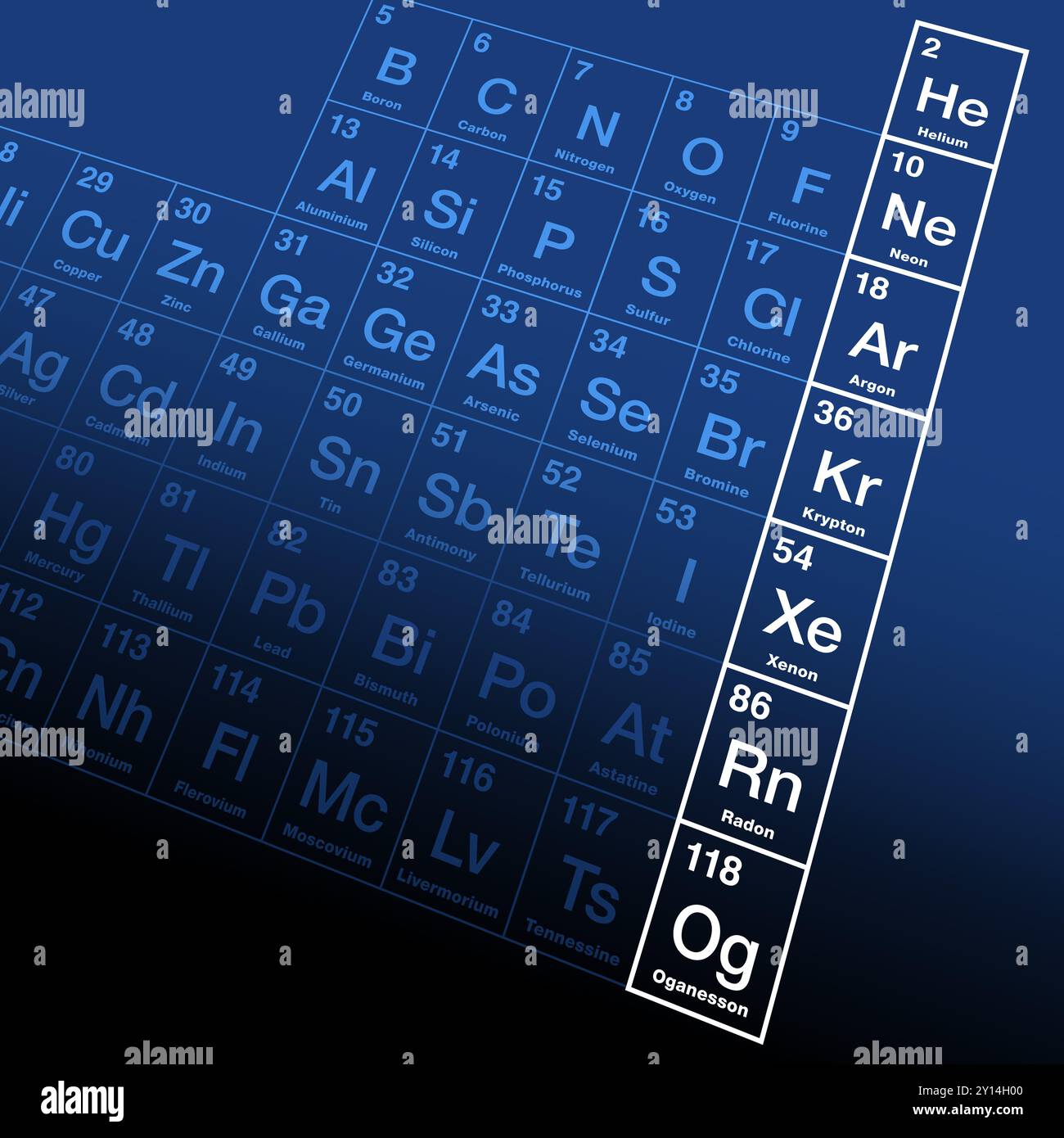

The Noble Gas Periodic Table is a becharm subject that delves into the singular properties and behaviors of the elements known as noble gases. These gases, which include helium, neon, argon, krypton, xenon, and radon, are located in Group 18 of the occasional table. Their constancy and inertness make them crucial in assorted scientific and industrial applications. This post will explore the characteristics, uses, and meaning of noble gases, providing a comprehensive understanding of their role in the periodical table.
The Characteristics of Noble Gases
The noble gases are qualify by their full outer electron shells, which make them exceedingly stable and non reactive. This stability is a key ingredient in their chemic behavior and applications. Let's delve into the specific properties of each noble gas:
- Helium (He): The lightest and most abundant noble gas, helium is known for its use in balloons and airships due to its low concentration. It is also used in cryogenics and as a shield gas in weld.
- Neon (Ne): Neon is notable for its use in neon signs, where it emits a typical red orange glow when electrically excited. It is also used in high voltage indicators and advertize signs.
- Argon (Ar): Argon is the third most abundant gas in the Earth's atmosphere. It is ordinarily used in weld and metalworking to make an inert atmosphere, forbid oxidation.
- Krypton (Kr): Krypton is used in energy efficient windows and fluorescent lamps. Its phantasmal lines are used as a standard for length measurement.
- Xenon (Xe): Xenon has respective applications, include use in car headlights, medical imaging, and as an anesthetic. Its power to form compounds, unlike other noble gases, makes it unique.
- Radon (Rn): Radon is a radioactive gas that is a byproduct of the decay of radium. It is known for its health risks, particularly in indoor environments where it can conglomerate and pose a risk of lung cancer.
The Historical Discovery of Noble Gases
The discovery of noble gases is a story of scientific curiosity and perseverance. The first noble gas to be discovered was helium, which was initially notice in the Sun's spectrum during a solar eclipse in 1868. It was later sequester on Earth in 1895. The other noble gases were discovered in the late 19th and early 20th centuries through the act of scientists like William Ramsay and Lord Rayleigh, who identified argon, neon, krypton, and xenon. Radon was discover in 1900 by Friedrich Ernst Dorn.
The Role of Noble Gases in the Periodic Table
The noble gases occupy a unequalled position in the Noble Gas Periodic Table. They are position in Group 18, the far right column of the periodical table. This placement reflects their total valency electron shells, which afford them their characteristic inertness. The periodic table's structure helps in interpret the trends and properties of these elements. for instance, as you locomote down the group, the atomic radius increases, and the boil and melting points also increase.
Here is a table summarizing the key properties of the noble gases:
| Element | Symbol | Atomic Number | Atomic Mass (u) | Boiling Point (C) | Melting Point (C) |
|---|---|---|---|---|---|
| Helium | He | 2 | 4. 0026 | 268. 93 | 272. 2 |
| Neon | Ne | 10 | 20. 180 | 246. 08 | 248. 59 |
| Argon | Ar | 18 | 39. 948 | 185. 85 | 189. 3 |
| Krypton | Kr | 36 | 83. 798 | 153. 22 | 157. 36 |
| Xenon | Xe | 54 | 131. 293 | 108. 1 | 111. 8 |
| Radon | Rn | 86 | 222. 018 | 61. 7 | 71. 0 |
Note: The properties list above are approximate values and can vary slenderly depending on the source.
Applications of Noble Gases
The unequalled properties of noble gases make them invaluable in various applications. Here are some of the key uses:
- Industrial Applications: Noble gases are used in weld and metalworking to create an inert atmosphere, keep oxidation and taint. Argon is particularly popular for this purpose.
- Medical Applications: Xenon is used as an anesthetic due to its ability to induce anesthesia without the side effects of traditional anesthetics. It is also used in medical imaging.
- Lighting and Display: Neon and argon are used in lighting applications, such as neon signs and fluorescent lamps. Xenon is used in eminent intensity discharge lamps and car headlights.
- Scientific Research: Noble gases are used in various scientific experiments and research due to their inertness and constancy. for instance, helium is used in cryogenics to attain extremely low temperatures.
- Environmental Monitoring: Radon sensing is crucial for environmental monitoring, as eminent levels of radon in indoor environments can pose significant health risks.
Safety and Handling of Noble Gases
While noble gases are generally inert and non toxic, handling them requires precaution. Here are some safety guidelines:
- Ventilation: Ensure proper airing when address noble gases to prevent the accumulation of gases, which can displace oxygen and guide to asphyxiation.
- Personal Protective Equipment (PPE): Use allow PPE, include gloves and safety glasses, to protect against potential hazards.
- Storage: Store noble gases in good ventilate areas away from heat sources and uncongenial substances.
- Disposal: Dispose of noble gases according to local regulations and guidelines to derogate environmental impact.
Note: Always refer to the Material Safety Data Sheet (MSDS) for specific handling and safety instructions for each noble gas.
Noble gases are a fascinating group of elements with unequaled properties and a encompassing range of applications. Their stability and inertness make them essential in respective scientific and industrial fields. Understanding the characteristics and uses of noble gases provides a deeper discernment for their role in the Noble Gas Periodic Table and their meaning in modernistic technology and enquiry.
From their historical discovery to their modernistic applications, noble gases continue to play a crucial role in our realize of chemistry and the natural creation. Their unparalleled properties create them essential in fields ranging from medicine to environmental monitoring, highlighting their importance in both scientific research and everyday life.