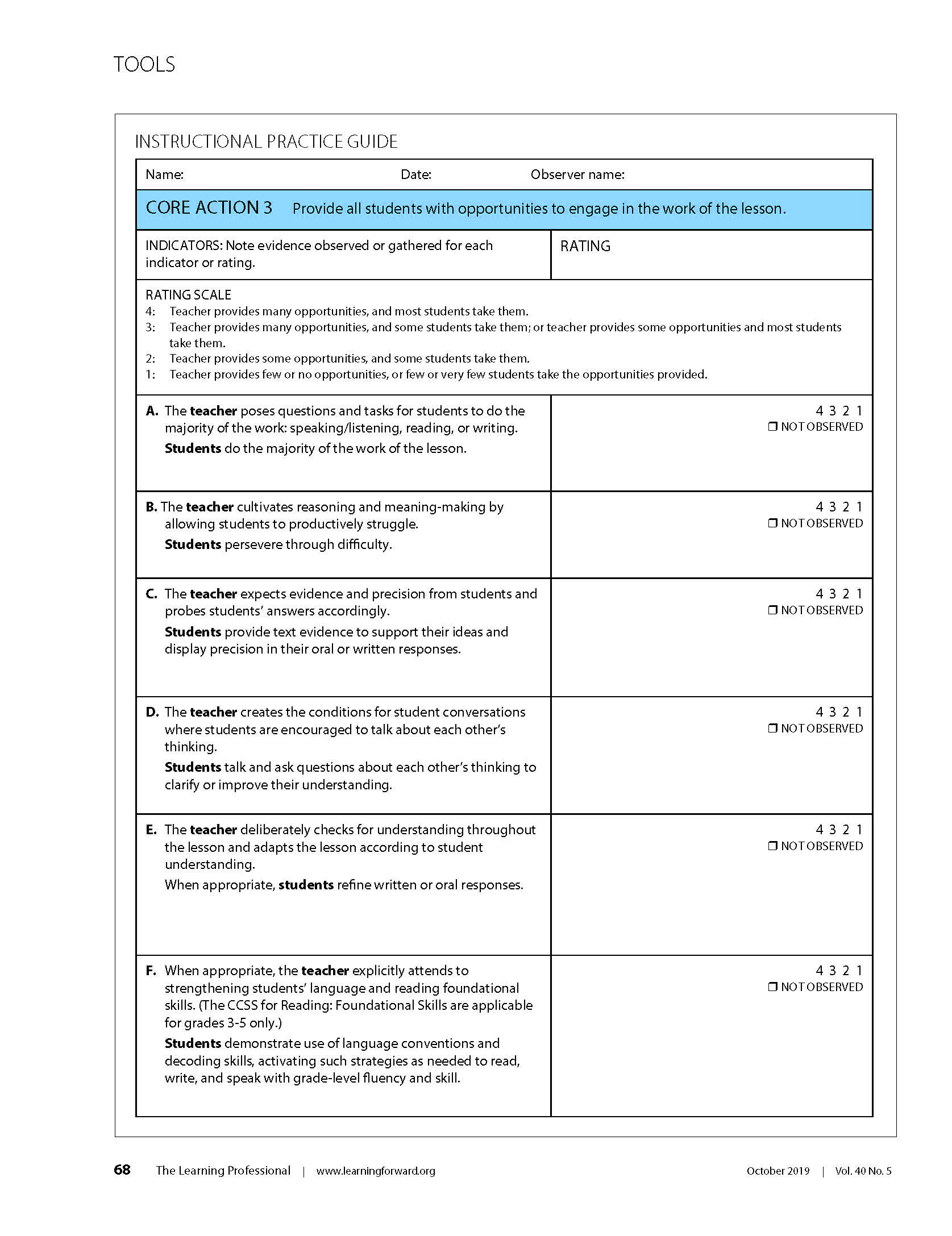

In the active cosmos of teaching, teachers are forever seeking efficient strategies to heighten student learning. One worthful imagination that has gained significant traction is the Instructional Practice Guide. This guidebook serves as a comprehensive toolkit for educators, providing grounds based practices and strategies to improve learn methods and student outcomes. By leverage the insights and recommendations outlined in an Instructional Practice Guide, educators can make more engaging and effective hear environments.
Understanding the Instructional Practice Guide
The Instructional Practice Guide is designed to support educators in implementing best practices in the classroom. It offers a wealth of information on diverse instructional strategies, assessment techniques, and classroom management methods. The guide is typically developed by educational experts and researchers who have conducted encompassing studies to name the most efficacious instruct practices.
One of the key features of an Instructional Practice Guide is its focus on grounds ground practices. This means that the strategies and techniques recommended in the usher are support by scientific inquiry and have been proven to enhance student learning. By borrow these practices, educators can insure that their learn methods are align with the latest educational enquiry and standards.
Key Components of an Instructional Practice Guide
An Instructional Practice Guide typically includes various key components that supply a holistic approach to improving instructional practices. These components include:
- Instructional Strategies: Detailed descriptions of various teach methods and techniques that can be used to engage students and enhance discover.
- Assessment Techniques: Guidelines on how to efficaciously assess student con and use assessment datum to inform direction.
- Classroom Management: Strategies for make a positive and productive classroom environment that supports memorise.
- Professional Development: Resources and recommendations for ongoing professional development to facilitate educators stay update with the latest educational practices.
Implementing Instructional Strategies
One of the most critical aspects of an Instructional Practice Guide is the section on instructional strategies. This section provides educators with a variety of instruct methods that can be used to engage students and enhance learning. Some of the commonly advocate instructional strategies include:
- Differentiated Instruction: Tailoring teach methods to see the diverse needs and see styles of students.
- Cooperative Learning: Encouraging students to act together in groups to accomplish common goals.
- Project Based Learning: Engaging students in existent existence projects that require critical thinking and problem work skills.
- Inquiry Based Learning: Encouraging students to ask questions, enquire, and discover answers through hands on activities.
To effectively apply these strategies, educators should:
- Review the commend strategies and select those that best fit their teaching style and student needs.
- Plan lessons that incorporate the prefer strategies and furnish open instructions to students.
- Monitor student progress and adjust instruction as needed to ensure that all students are employ and learning.
Note: It is important to remember that no single instructional scheme is universally effectual. Educators should experiment with different strategies and adapt them to converge the unique needs of their students.
Assessment Techniques
Assessment is a crucial component of efficient teaching. An Instructional Practice Guide provides educators with a range of assessment techniques that can be used to evaluate student learn and inform instruction. Some of the commonly recommend assessment techniques include:
- Formative Assessments: Ongoing assessments that render feedback to both teachers and students during the learning process.
- Summative Assessments: End of unit or end of course assessments that evaluate student memorise and achievement.
- Performance Assessments: Assessments that require students to manifest their knowledge and skills through real world tasks or projects.
- Self Assessments: Assessments that encourage students to reflect on their own memorize and set goals for improvement.
To effectively use assessment techniques, educators should:
- Choose assessment methods that align with the learning objectives and instructional strategies.
- Provide clear criteria for success and feedback to assist students translate their progress.
- Use assessment datum to inform teaching and make adjustments as postulate to back student discover.
Note: It is essential to use a variety of assessment techniques to gain a comprehensive understanding of student learning. Relying on a single assessment method may not provide a complete picture of student achievement.
Classroom Management
Effective classroom management is essential for create a confident and generative memorize environment. An Instructional Practice Guide offers a range of strategies for managing classroom deportment and promoting a plus larn acculturation. Some of the unremarkably recommended classroom management strategies include:
- Establishing Clear Expectations: Clearly communicating classroom rules and expectations to students.
- Consistent Routines: Implementing reproducible routines and procedures to create a structured con environment.
- Positive Reinforcement: Using convinced reinforcement to encourage desired behaviors and motivate students.
- Conflict Resolution: Teaching students conflict resolution skills to manage disagreements and promote a plus classroom acculturation.
To efficaciously handle the classroom, educators should:
- Establish open rules and expectations and transmit them to students at the get of the school year.
- Implement coherent routines and procedures to create a structured see environment.
- Use convinced reinforcement to encourage trust behaviors and motivate students.
- Teach students conflict declaration skills to grapple disagreements and promote a convinced classroom acculturation.
Note: Effective classroom management requires consistency and patience. Educators should be ready to adapt their strategies as ask to meet the singular needs of their students.
Professional Development
Continuous professional development is crucial for educators to stay updated with the latest educational practices and improve their learn skills. An Instructional Practice Guide provides resources and recommendations for ongoing professional development. Some of the commonly recommended professional development activities include:
- Workshops and Seminars: Attending workshops and seminars to learn about new instructional strategies and assessment techniques.
- Online Courses: Enrolling in online courses to gain knowledge and skills in specific areas of teaching.
- Peer Collaboration: Collaborating with colleagues to share best practices and hear from each other's experiences.
- Reflective Practice: Engaging in reflective practice to assess teaching methods and create improvements.
To effectively engage in professional development, educators should:
- Identify areas of interest or need and seek out relevant professional development opportunities.
- Set goals for professional development and track progress towards achieve them.
- Reflect on learning and utilize new knowledge and skills to ameliorate learn practices.
Note: Professional development is an ongoing process. Educators should unendingly seek out new larn opportunities to stay updated with the latest educational practices and improve their teach skills.
Benefits of Using an Instructional Practice Guide
Using an Instructional Practice Guide offers numerous benefits for educators and students alike. Some of the key benefits include:
- Improved Student Outcomes: By implementing grounds based practices, educators can enhance student see and achievement.
- Enhanced Teaching Skills: The usher provides educators with a wealth of info and resources to amend their learn skills and strategies.
- Increased Confidence: Educators who use the usher may feel more confident in their learn abilities, cognize that they are using prove strategies.
- Positive Classroom Environment: The guidebook offers strategies for create a positive and generative classroom environment that supports learning.
To maximize the benefits of using an Instructional Practice Guide, educators should:
- Review the guide thoroughly and take strategies that align with their teach style and student needs.
- Implement the chosen strategies systematically and proctor their effectuality.
- Reflect on their teaching practices and get adjustments as take to amend student outcomes.
Note: The benefits of using an Instructional Practice Guide are maximized when educators are committed to continuous improvement and expression.
Challenges and Solutions
While an Instructional Practice Guide offers legion benefits, educators may also face challenges when implementing its recommendations. Some common challenges and solutions include:
| Challenge | Solution |
|---|---|
| Time Constraints | Prioritize strategies that can be easily integrate into be lesson plans and routines. |
| Resistance to Change | Communicate the benefits of the new strategies to students and colleagues and supply support during the changeover. |
| Lack of Resources | Seek out complimentary or low cost resources and cooperate with colleagues to partake materials and ideas. |
| Student Diversity | Differentiate instruction to meet the various needs and larn styles of students. |
To overcome these challenges, educators should:
- Plan ahead and allocate time for apply new strategies.
- Communicate the benefits of the new strategies to students and colleagues and ply back during the conversion.
- Seek out resources and collaborate with colleagues to partake materials and ideas.
- Differentiate didactics to see the diverse needs and learning styles of students.
Note: Addressing challenges requires a proactive approach and a willingness to adapt and innovate.
Case Studies and Success Stories
Many educators have successfully enforce the strategies adumbrate in an Instructional Practice Guide and achieve substantial improvements in student learning and classroom management. Here are a few case studies and success stories:
Case Study 1: Differentiated Instruction
In a middle school classroom, a teacher implemented severalise pedagogy strategies to meet the various needs of her students. She used pre assessments to name students' strengths and weaknesses and cut her lessons consequently. As a solution, student engagement and achievement better significantly.
Case Study 2: Cooperative Learning
In a high school skill class, a instructor introduce conjunct learning activities to encourage students to work together and solve problems collaboratively. The students formed groups and worked on projects that required them to utilise scientific concepts to existent world situations. The teacher observed increase student engagement and meliorate problem work skills.
Case Study 3: Project Based Learning
In an elementary school classroom, a teacher enforce projection based learning to engage students in hands on, real world projects. The students work on a undertaking to design and progress a model city, integrate concepts from science, math, and societal studies. The projection not only raise student learning but also fostered a sense of community and collaboration.
These case studies attest the effectiveness of the strategies outlined in an Instructional Practice Guide and highlight the positive impingement they can have on student discover and classroom management.
Note: Success stories and case studies provide worthful insights into the pragmatic application of instructional strategies and can inspire educators to enforce similar practices in their own classrooms.
to sum, the Instructional Practice Guide is a worthful imagination for educators seeking to enhance their teach practices and meliorate student outcomes. By leverage the evidence based strategies and techniques outlined in the usher, educators can create more employ and effective memorize environments. The guide offers a comprehensive approach to instructional practices, assessment techniques, classroom management, and professional development, provide educators with the tools they ask to win. Through continuous reflection and version, educators can maximize the benefits of using an Instructional Practice Guide and achieve substantial improvements in student learning and classroom management.
Related Terms:
- student achievement partners practice guidebook
- instructional practice usher ipg
- tennessee instructional practice guide
- tn foundational skills instructional usher
- educators practice guide
- ipg walkthrough puppet tn